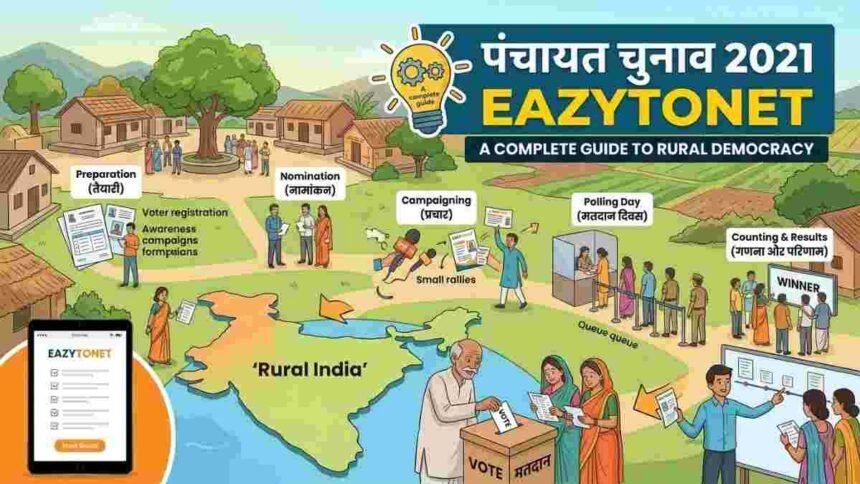
The year 2021 was a landmark time for grassroots politics in India. For many villagers, the panchayat chunav 2021 eazytonet became the go-to resource for understanding how local elections worked, who the candidates were, and how to cast their votes effectively. Unlike national or state elections, panchayat polls deal with your neighborhood roads, school funds, and water supply. If you ever felt confused about the process, you were not alone. This article walks you through everything from candidate lists to vote counting, keeping the language simple and the information human.
Understanding the Basics of Panchayat Elections
Before diving into the 2021 data, let us recall what makes panchayat elections unique. These are local body elections held every five years to elect members for Gram Panchayat, Panchayat Samiti, and Zila Parishad. The panchayat chunav 2021 eazytonet platform helped millions of rural voters access candidate affidavits, polling booth locations, and result updates without needing a newspaper or TV.
Who Can Vote and Contest?
Any citizen of India who is 18 years or older and lives in that village can vote. To contest, a person must be at least 21 years old, not be a government employee, and have no criminal records that disqualify them under the Representation of the People Act. In 2021, many states like Uttar Pradesh, Madhya Pradesh, and West Bengal saw large numbers of women candidates stepping forward, thanks to the 33% reservation policy.
Key Dates and Phases in 2021
Because the pandemic was still active, elections were held in multiple phases. For example, West Bengal’s panchayat polls took place across six phases in June–July 2021. The panchayat chunav 2021 eazytonet compiled these phase-wise dates into one simple calendar, helping voters remember when their village was going to vote. Each phase included nomination filing, scrutiny, withdrawal, and polling day.
How to Find Your Name in the Voter List
One of the biggest fears during any election is walking to the booth only to find your name missing. For the 2021 panchayat polls, the voter list was available online and offline. You could check by visiting the State Election Commission’s website or using the panchayat chunav 2021 eazytonet search tool. All you needed was your district, block, and village name.
Steps to Download the Voter List PDF
First, go to the official State Election Commission portal. Second, click on “Panchayat Voter List 2021”. Third, select your state, district, and gram panchayat. A PDF will open. Use Ctrl+F to search for your name. If you do not find it, you could file Form-6 at the Block Development Office. Many villagers in 2021 discovered spelling errors or missing family members through this method and got corrections done before the last date.
Candidate Nominations and Symbols
Panchayat elections use symbols (like bicycle, hand, lotus, or a simple star) so that even illiterate voters can recognize their chosen candidate. In 2021, the panchayat chunav 2021 eazytonet published a full list of symbols allotted to each candidate at the ward level. This was extremely helpful because unlike general elections, panchayat polls have hundreds of independent candidates, each with a unique symbol.
How to File a Nomination Paper
Any candidate must fill Form B-1 (for general seats) or Form B-2 (for reserved seats like SC/ST/OBC). The form needs proposers – usually two voters from the same ward. Then the candidate deposits a security amount (often ₹1,000 to ₹5,000 depending on the state). After scrutiny, if the nomination is valid, the candidate receives the official symbol. In 2021, many young graduates returned to their villages to contest, bringing fresh ideas for waste management and digital literacy.
Voting Day – What to Expect at the Polling Booth
Imagine a school building with long queues, a green-colored EVM (Electronic Voting Machine), and officials in masks. That was the scene across rural India in 2021. Social distancing was maintained because of COVID-19. The panchayat chunav 2021 eazytonet shared booth-level COVID guidelines: hand sanitizer at entry, thermal screening, and separate timing for elderly voters from 7 AM to 9 AM.
Do Panchayat Elections Use EVMs?
Yes, most states use EVMs for panchayat polls, but some states still use ballot paper for Gram Panchayat level due to low budget. In 2021, Uttar Pradesh used ballot boxes for ward member elections but EVMs for Zila Parishad. You press the button next to your candidate’s symbol, and a red light glows. A VVPAT slip shows your vote for seven seconds. Do not worry – polling officials are always there to help first-time voters.
What If Your Name Is Missing on Polling Day?
Sometimes technical errors happen. In 2021, a few villagers found their names in the online list but not on the booth’s printed register. The solution was to ask for Form-17B (a blank declaration) and vote on a separate paper ballot called a “tendered ballot.” The panchayat chunav 2021 eazytonet explained this process with simple infographics, saving many voters from going home disappointed.
Counting, Results, and Post-Election Process
Counting usually happens on a fixed date, often two to three days after polling ends. In 2021, results were announced ward by ward. The candidate with the highest number of votes wins. Once the results are out, the winning candidate receives a certificate from the Returning Officer. Then the first meeting of the Gram Panchayat elects the Sarpanch and Deputy Sarpanch.
Where to Check Official Results
You can check results on the State Election Commission’s result dashboard. Alternatively, the panchayat chunav 2021 eazytonet aggregated result links for all states in one place. Just select your state and panchayat name. Within minutes, you could see the winner’s name, margin of votes, and voter turnout percentage. In 2021, many villages celebrated over 80% turnout – a proud moment for rural democracy.
FAQ Section
Q1: Was the panchayat chunav 2021 eazytonet a government website?
No, it was a third-party information platform that simplified panchayat election data for common voters.
Q2: Can I still access 2021 panchayat election results today?
Yes, most State Election Commissions keep archives. You can request a copy under the RTI Act if not available online.
Q3: What documents do I need to vote in panchayat elections?
Voter ID card, Aadhaar, passport, driving license, or any government-issued photo ID.
Q4: How many seats are reserved for women in panchayats?
33% of total seats are reserved for women, including SC/ST women. Some states like Madhya Pradesh have 50% reservation.
Q5: Can a non-political party candidate win panchayat elections?
Absolutely. Most panchayat winners are independents or supported by local groups, not national parties.
Conclusion
Panchayat elections are the heartbeat of India’s rural governance. The panchayat chunav 2021 eazytonet served as a bridge between complex election procedures and ordinary villagers who just wanted to know where to vote and who to vote for. From checking voter lists to understanding symbols and COVID rules, that platform made democracy feel less intimidating. Whether you are a student, a farmer, or a young professional, knowing how your local panchayat is elected helps you ask better questions about your village’s budget and development. Even though 2021 has passed, the lessons remain – stay on the voter list, verify your candidate’s background, and never skip your chance to vote. After all, your panchayat’s next road, school, or hospital could depend on just one vote.