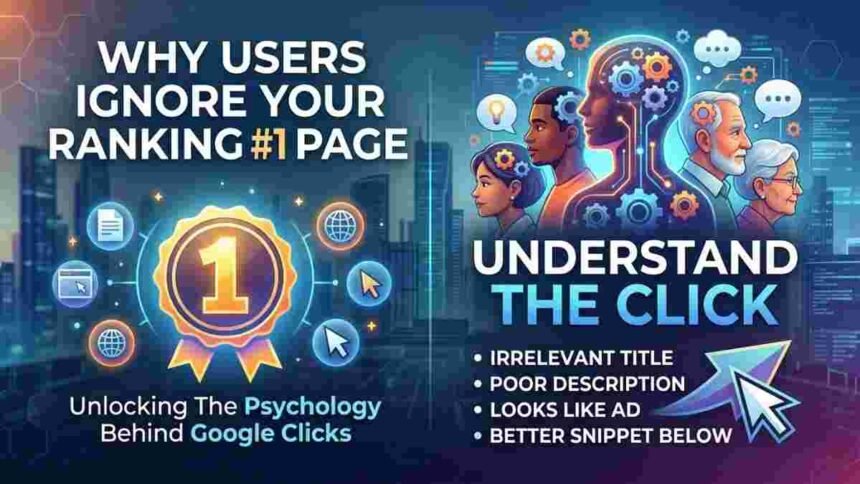
Most people think ranking number one on Google solves everything. That idea sounds logical at first glance. Higher ranking should mean more clicks and more traffic. However, reality behaves very differently in many cases. Many top-ranking pages get ignored every single day. That situation feels confusing for beginners. It even surprises experienced marketers sometimes.
So what really happens here?
The answer sits inside human psychology. Search engines show results, and humans make decisions. Those decisions follow emotions, habits, and subtle mental triggers. Rankings alone do not control behaviour. Perception controls behaviour much more strongly.
Here’s what an SEO consultant in Melbourne would tell you about users who skip number one results.
First Impressions Matter More Than Rankings
Users do not always read rankings carefully. They scan results quickly. Their eyes move fast across the page. They look for something that feels right instantly. That feeling forms within seconds.
A title acts like a first impression. A boring title creates zero excitement, while a confusing title creates hesitation. A weak title creates distrust. So, even if the page ranks first, users may scroll past it.
For example, a title like “Best Digital Marketing Services” sounds generic. It feels like every other result. Now compare that with something like “Struggling With Traffic? Here’s a Proven Growth Plan.” The second option sparks curiosity immediately.
The Role of Curiosity in Click Behaviour
Curiosity drives clicks more than position. Humans love open loops. They want answers, solutions, or something new. A result that creates curiosity wins attention. A result that feels predictable gets ignored. Even if it ranks first, it may fail.
So how does curiosity work here?
It often comes from incomplete information. It comes from emotional triggers and unexpected angles. For example, “Why Most SEO Strategies Fail in 2026” creates tension. That tension pushes users to click.
Trust Signals Shape User Decisions
Users do not blindly trust top results anymore. They have learned to question content. They look for signals of credibility. These signals include brand names, recognisable domains, and emotional familiarity. A known brand often attracts more clicks than an unknown site, even if the unknown site ranks higher.
For example, a well-known marketing agency may appear in position three. A random blog may sit in position one. Many users will choose the agency. That choice comes from trust, not ranking.
Moreover, visual elements matter a lot. A clean URL builds confidence, but a messy URL creates doubt. A clear meta description feels reliable, while avague description feels suspicious.
So, trust beats position in many cases.
The Power of Emotional Triggers
Human decisions rarely stay logical. Emotions guide behavior most of the time. Search clicks follow the same rule.
Users respond to fear, curiosity, urgency, and excitement. A title that triggers emotion gets attention quickly. A neutral title fades into the background. For example, “Fix Your Website Issues Today” sounds fine. However, “Your Website Is Losing Customers Right Now” creates urgency. That urgency pushes action.
Moreover, emotional language makes content feel alive. It connects with the reader instantly. That connection increases click chances significantly.
Search Intent Mismatch Kills Clicks
Ranking number one means nothing without matching intent. Users search with specific goals in mind. Those goals vary widely.
Some users want information. Some users want quick answers. Some users want to buy something immediately. If your page does not match that intent, users will skip it. Even if it ranks first.
For example, a user searching “best SEO tools” expects a list. A page offering only theory will disappoint them. They will move to another result quickly.
Moreover, intent changes over time. Trends shift constantly. User expectations evolve quickly. So, pages must adapt continuously.
A smart SEO consultant in Melbourne understands this deeply. They focus on intent before rankings.
The Influence of Visual Hierarchy
Google results pages are not just text. They contain visual structure. That structure influences attention heavily.
Users notice bold titles first. Then they read descriptions. Then they glance at URLs. Rich snippets also attract attention. If your result lacks visual appeal, it loses clicks—Even at position one.
For example, a result with star ratings stands out. A result with FAQ snippets looks helpful. These features create visual dominance.
Moreover, spacing and readability matter. A cluttered result feels overwhelming. A clean result feels inviting. So, design plays a silent role in click behavior.
The Impact of Meta Descriptions
Meta descriptions act like mini advertisements. They support the title, provide context, and influence decisions. A weak description reduces clicks, but a strong description increases interest. For example, a vague description like “Learn about SEO strategies” feels boring. A detailed description like “Discover proven tactics that boost traffic in 30 days” feels compelling.
Moreover, descriptions should address user pain points. They should offer clear value. They should create urgency or curiosity.
Ignoring meta descriptions costs clicks. Many people underestimate this factor.
Mobile Behaviour Is Different
Mobile users behave differently from desktop users. They scroll more, scan faster, and make quicker decisions. A mobile screen shows fewer results initially. However, users still scroll past the first result often.
Moreover, mobile users prefer concise information. They dislike long or complex titles. They want clarity immediately.
If your result feels heavy or confusing, they will skip it quickly.
So, mobile optimisation plays a key role in clicks.
Final Thoughts
Ranking number one feels like a big achievement. It reflects strong SEO efforts. However, it does not guarantee success.
Users do not think like algorithms. They think emotionally, act instinctively, and choose based on perception. So, clicks depend on psychology more than position.
Understanding this gives you an advantage. It helps you optimise smarter and attract real attention. If you need more insights into this aspect, feel free to reach out to Make My Website.