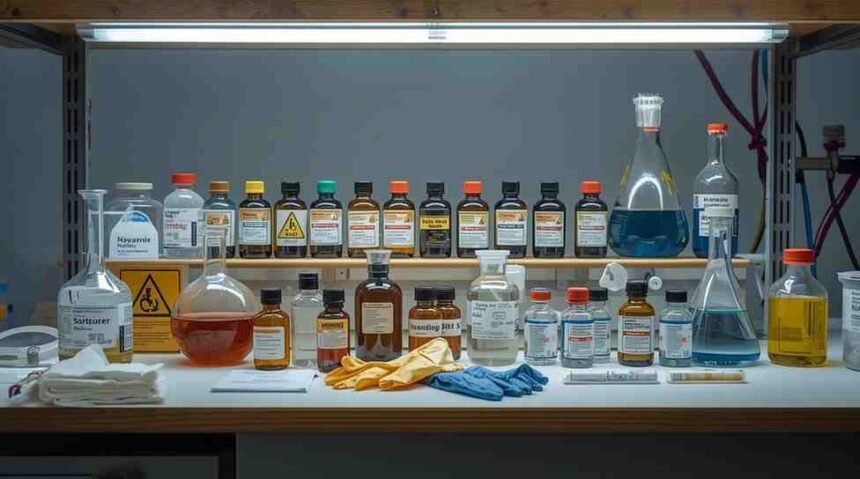
Understanding the Risks Associated With Home and School Lab Kits
Laboratory kits are widely used in schools, homes, and science clubs to encourage hands-on learning. While they are designed to be safe, it’s still important for students, parents, and teachers to understand the possible hazards. Many people don’t realize that chemicals in a lab kit may potentially cause irritation, allergic reactions, or safety concerns if the instructions are ignored. Learning about these risks helps make experiments safer, more enjoyable, and more educational.
Common Types of Chemicals Found in Lab Kits
Most lab kits include a mix of safe, low-grade chemicals meant for basic science experiments. These may include acids, bases, salts, indicators, and organic compounds. Understanding what each chemical does can help students handle them responsibly.
Acids and Bases in Educational Kits
Acids like citric acid or vinegar powder and bases such as baking soda are frequently used. Although mild, they must still be handled with care because chemicals in a lab kit may potentially cause minor skin or eye irritation when misused.
Organic Compounds and Indicators
Some kits contain organic materials like starch, iodine solutions, or natural dyes. These are generally safe but can still stain clothing or cause mild reactions in sensitive individuals.
How Exposure Happens During Experiments
Exposure doesn’t only happen when chemicals spill. It can occur through inhalation, contact, or accidental mixing. Beginners sometimes underestimate how simple mistakes can lead to unexpected reactions.
Direct Contact With Skin or Eyes
Most reactions in school settings happen when students touch their faces after handling chemicals. Even harmless-seeming powders can irritate sensitive areas. This is why chemicals in a lab kit may potentially cause discomfort if proper hygiene isn’t followed.
Mixing Wrong Components
Even if the chemicals are safe individually, incorrect mixing can lead to foaming, heating, or mild gas release. These reactions aren’t dangerous when supervised, but they still emphasize the need to follow instructions carefully.
Safety Guidelines Every Student Should Follow
Good safety habits can turn any experiment into a fun learning experience. Teachers and parents play a key role in building these habits early.
Always Read Instructions First
The simplest rule is often the most ignored. Reading labels, dosage amounts, and safety notes prevents mistakes. When beginners skip these steps, chemicals in a lab kit may potentially cause outcomes they didn’t expect, such as spills or stronger-than-intended reactions.
Wear Basic Protective Gear
Gloves, goggles, and aprons protect students from accidental splashes. Even with mild chemicals, this gear provides peace of mind and prevents unnecessary irritation or injury.
Keep Workspaces Organized
Clutter increases risk. Students should always keep experiments on a stable, clean surface with clear space around them. This reduces the chance of knocking over containers or mixing the wrong ingredients.
Why Proper Disposal Matters
Once an experiment is finished, many students don’t know what to do with leftover chemicals. Proper disposal is essential for safety, hygiene, and environmental protection.
Do Not Pour Everything Down the Drain
Some chemical residues can react with water or pipes. Even small amounts can affect plumbing or create strong smells. Teachers should guide students about which liquids can be safely poured away and which should be neutralized first.
Use Waste Containers When Provided
Some lab kits include small disposal containers meant for used materials. Using these correctly ensures that chemicals in a lab kit may potentially cause no harm once the activity is complete. Learning proper disposal habits early prepares students for higher-level sciences later in life.
FAQ Section
Q1: Are home science kits safe for children?
Yes, they are generally designed for safety. However, adult supervision is essential to ensure chemicals are handled correctly.
Q2: What should I do if a chemical touches my skin?
Wash the area with cool water and mild soap. If irritation continues, seek medical advice.
Q3: Can lab kit chemicals damage furniture or fabrics?
Some can stain or cause minor discoloration, so using a protective table cover is recommended.
Q4: Do I need protective gear for basic experiments?
Gloves and goggles are recommended even for mild chemicals to avoid irritation and accidental contact.
Q5: What if I accidentally mix chemicals not meant to be combined?
Stop the reaction if possible and inform an adult or teacher immediately. Never attempt to fix the mixture alone.
Conclusion
Understanding the risks and responsibilities involved with laboratory kits ensures a safe and rewarding learning environment. While chemicals in a lab kit may potentially cause issues when misused, proper instruction, organization, and safety habits make them perfectly suitable for students of all levels. By teaching young learners how to respect and handle chemicals wisely, we encourage curiosity, responsibility, and a deeper appreciation for science. When used correctly, lab kits remain one of the most effective tools for bringing scientific concepts to life and inspiring future scientists.