Understanding CBCT Technology for the Lower Jaw
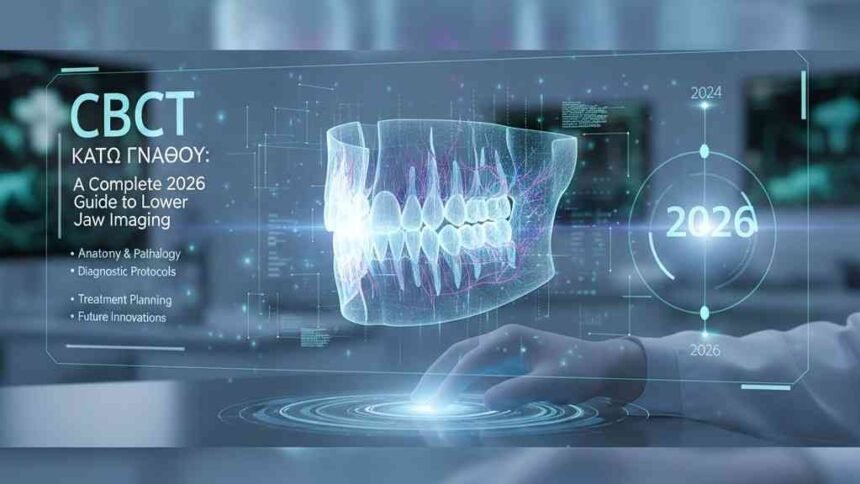
Cone Beam Computed Tomography has become a cornerstone of modern dental diagnostics, offering precise visualization of bone structures, nerve pathways, and anatomical variations. When it comes to the lower jaw, cbct κατω γναθου provides clinicians with unmatched clarity, helping them diagnose, plan, and treat with confidence. This advanced imaging method is now widely used in implant dentistry, oral surgery, orthodontics, and temporomandibular joint evaluations.
What Makes Lower Jaw CBCT Imaging So Essential?
The lower jaw is a complex anatomical region. It houses vital structures such as the inferior alveolar nerve, mental foramen, mandibular canal, and the roots of posterior teeth. CBCT imaging allows dentists to examine these structures in three dimensions, reducing the guesswork that often comes with traditional 2D X-rays.
Clinical Value of 3D Imaging
3D visualization reveals hidden pathologies, bone density issues, and root morphology that may not appear in standard panoramic radiographs. This leads to improved diagnostic accuracy.
Reducing Surgical Risks
By mapping nerve locations and bone contours, CBCT helps prevent complications during invasive procedures like implant placement.
How Dentists Use CBCT Scans in Lower Jaw Treatment Planning
Treatment planning has evolved significantly with modern digital tools. Whether a patient needs a dental implant, extraction, or orthodontic corrections, CBCT imaging plays a critical role in ensuring predictable outcomes. The detailed insights offered by lower jaw scans support precision-based dentistry, making every step safer and more effective.
Implant Dentistry and Nerve Mapping
Before placing an implant, practitioners must assess bone density, height, and width. CBCT scans reveal whether the patient has enough bone and help determine the safest implant positioning.
Detecting Hidden Problems Early
Infections, cysts, impacted teeth, and bone lesions are often discovered incidentally during CBCT evaluations, enabling early intervention.
Key Advantages of Using CBCT for Lower Jaw Diagnosis
CBCT offers several benefits over traditional imaging, contributing to its increasing popularity in dental clinics. From fast scanning times to better diagnostic accuracy, its advantages are significant.
- High-resolution 3D views of bone and soft-tissue structures.
- Lower radiation exposure compared to medical CT scans.
- Better detection of pathology, including fractures, impacted teeth, and bone abnormalities.
- Accurate treatment predictions, especially for implants and surgical planning.
For many patients, the real benefit is peace of mind. With advanced imaging, every diagnosis becomes clearer, and every treatment plan becomes more informed.
Comparing CBCT Imaging to Traditional Dental X-Rays
Traditional 2D X-rays have been used for decades and remain valuable, but they lack the depth and detail of CBCT technology. Panoramic radiographs can sometimes miss lesions or distort anatomical structures, while periapical X-rays only capture small areas.
Why 3D Matters for the Lower Jaw
The mandibular canal, nerve pathways, and angulated roots require three-dimensional analysis. CBCT generates slice-by-slice views, offering information impossible to obtain with 2D images.
Enhanced Patient Communication
Patients often understand their diagnosis better when shown a 3D model. This helps build trust and improve treatment acceptance.
When Is a Lower Jaw CBCT Scan Necessary?
Dentists do not order CBCT scans for every case. They reserve them for situations requiring detailed structural evaluation. Some common scenarios include:
- Planning the placement of dental implants
- Evaluating impacted lower wisdom teeth
- Assessing jaw fractures or trauma
- Locating nerve pathways before surgery
- Diagnosing cysts, tumors, or bone lesions
- Investigating chronic jaw pain or TMJ disorders
- Orthodontic evaluation for complex cases
In these situations, cbct κατω γναθου becomes an irreplaceable diagnostic tool that enhances both safety and treatment precision.
FAQ Section
What is a CBCT scan used for in the lower jaw?
It is used to evaluate bone structure, nerves, tooth roots, and any abnormalities that require detailed 3D visualization.
Is a CBCT scan painful?
No, the scan is quick and completely painless. The machine rotates around the head without any physical discomfort.
How long does the scan take?
Most CBCT scans take between 10 and 20 seconds, depending on the machine and field of view.
Is CBCT safe for patients?
Yes. CBCT has lower radiation exposure than medical CT, making it safe for most patients when clinically necessary.
Can CBCT help with dental implant planning?
Absolutely. The technology is crucial for evaluating bone density, nerve location, and implant positioning.
Conclusion
CBCT imaging has revolutionized modern dentistry, especially when evaluating the lower jaw. From implant planning to diagnosing hidden pathologies, the technology enhances accuracy and safety in ways traditional X-rays cannot. With its highly detailed 3D views, cbct κατω γναθου continues to be one of the most valuable diagnostic tools for dentists and oral surgeons. As technology advances, the use of CBCT will only grow, offering patients better outcomes and more predictable treatments.