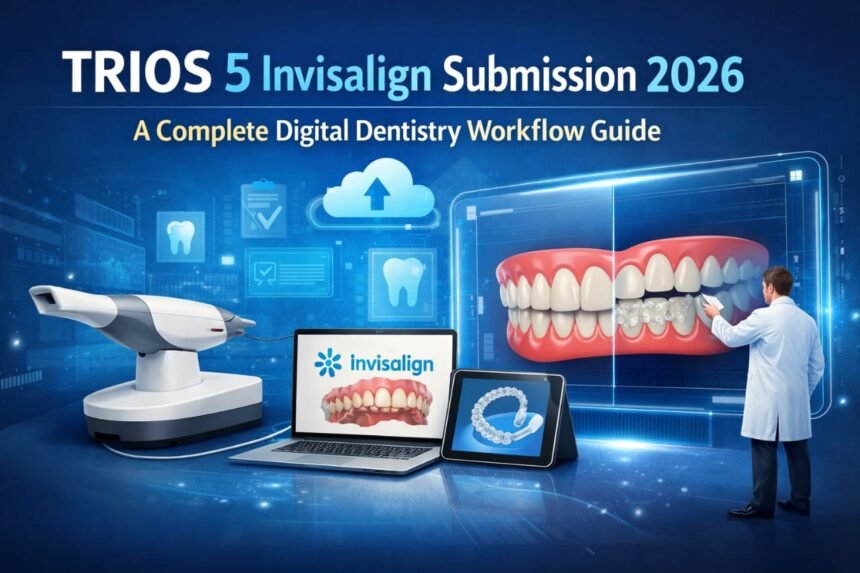
Digital dentistry continues to evolve rapidly, and one of the most talked-about advancements this year is trios 5 invisalign submission 2024. This workflow represents a major step forward for orthodontists and dental professionals who want faster case submissions, improved scan accuracy, and a smoother patient experience. With modern clinics relying heavily on intraoral scanners and cloud-based treatment planning, understanding this process is now essential.
This article explains how the workflow functions, why it matters in 2026, and how dental practices can benefit from adopting it.
Understanding the TRIOS 5 and Invisalign Integration
The TRIOS 5 intraoral scanner is designed for speed, precision, and patient comfort. When combined with Invisalign’s digital ecosystem, it creates a seamless pathway from scanning to treatment approval.
What Makes TRIOS 5 Different?
Unlike earlier scanners, TRIOS 5 is lighter, cordless, and optimized for faster data capture. The improved ergonomics reduce hand fatigue, while advanced optics ensure highly detailed scans. These features directly impact the quality of Invisalign case submissions by minimizing rescans and errors.
Invisalign Compatibility in 2026
Invisalign has refined its cloud-based submission portal to better integrate with scanners like TRIOS 5. The result is a streamlined process where scan data transfers securely and quickly, allowing orthodontists to move from consultation to treatment planning without delays.
The Digital Workflow Explained Step by Step

A clear understanding of the workflow helps clinics avoid mistakes and maximize efficiency.
Scanning and Data Capture
The process begins with a full-arch scan using the TRIOS 5. The scanner captures precise 3D images of teeth and soft tissue, ensuring Invisalign receives accurate digital impressions. In trios 5 invisalign submission 2024, scan validation tools help clinicians confirm quality before submission.
Uploading and Case Review
Once scanning is complete, data is uploaded directly to the Invisalign Doctor Site. Automated checks reduce rejection rates by identifying missing information early. This step saves time and prevents unnecessary back-and-forth communication.
Benefits for Orthodontists and Dental Clinics

Adopting this workflow provides practical advantages that go beyond convenience.
Faster Case Turnaround
Digital submissions significantly reduce the time between patient consultation and aligner production. With trios 5 invisalign submission 2024, clinicians can often submit cases on the same day, improving overall practice efficiency.
Improved Patient Experience
Patients appreciate shorter chair time and the absence of traditional impressions. The comfort of digital scanning, combined with visual treatment previews, builds trust and increases case acceptance rates.
Common Challenges and How to Overcome Them
Even advanced systems can present challenges, especially for clinics transitioning from older workflows.
Learning Curve for Staff
Dental teams may initially struggle with new software interfaces. Regular training sessions and hands-on practice help staff gain confidence quickly. Many clinics report full adaptation within a few weeks.
Ensuring Scan Accuracy
Proper scanning technique remains critical. Maintaining a dry field and following recommended scan paths ensures that Invisalign receives usable data. Consistent protocols reduce submission rejections and revisions.
Why This Workflow Matters in 2026 and Beyond

The dental industry is increasingly focused on efficiency, accuracy, and patient-centric care.
Staying Competitive
Clinics that adopt trios 5 invisalign submission 2024 position themselves as technologically advanced practices. This reputation attracts tech-savvy patients and differentiates clinics in competitive markets.
Future-Ready Dentistry
As AI-driven treatment planning and digital orthodontics continue to expand, workflows built around advanced scanners like TRIOS 5 ensure long-term compatibility with future innovations.
FAQ Section
What is TRIOS 5 used for in orthodontics?
TRIOS 5 is an intraoral scanner used to capture precise digital impressions for orthodontic and restorative treatments.
Is the submission process fully digital?
Yes, the entire workflow from scanning to Invisalign case submission is digital, eliminating the need for physical impressions.
Does this workflow reduce treatment planning time?
Yes, faster uploads and fewer errors significantly shorten the planning and approval phase.
Is training required to use TRIOS 5 effectively?
Basic training is recommended, but most dental professionals adapt quickly due to the intuitive design.
Can small clinics benefit from this system?
Absolutely. Digital workflows improve efficiency and patient satisfaction regardless of clinic size.
Conclusion
Digital transformation in orthodontics is no longer optional, and trios 5 invisalign submission 2024 highlights how far the industry has progressed. By combining high-precision scanning with a refined Invisalign submission process, clinics can deliver faster, more accurate, and more comfortable treatment experiences. For orthodontists aiming to stay competitive and future-ready, adopting this workflow is a practical and strategic decision that aligns with the evolving expectations of modern patients.