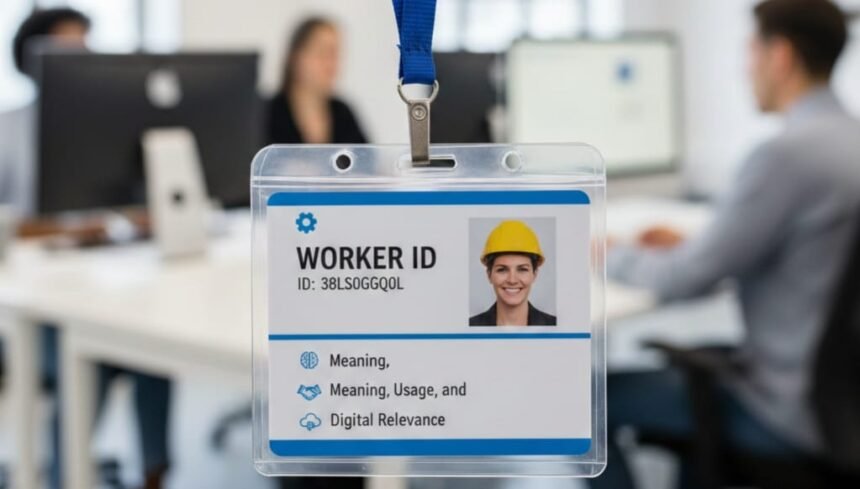
In today’s data-driven environments, identification systems play a quiet yet powerful role in how organizations function. One such emerging identifier is worker id:38ls0ggq0l, a term that may look technical at first glance but carries practical significance in modern workforce management. From internal tracking to digital accountability, this type of worker identification reflects how structured systems support efficiency, security, and clarity in professional settings.
Understanding Worker Identification Systems
Worker identification codes are designed to uniquely distinguish individuals within a system. These IDs are often alphanumeric, ensuring that each worker can be accurately referenced without confusion.
Why unique IDs matter in organizations
Unique identifiers help organizations avoid duplication, reduce administrative errors, and streamline record keeping. Instead of relying solely on names, which can be repeated or misspelled, a structured ID ensures precision.
Evolution of digital workforce tracking
As workplaces shifted toward digital platforms, employee records followed. Manual registers have been replaced by databases, dashboards, and automated systems that rely heavily on unique worker codes for smooth operation.
The Practical Role of worker id:38ls0ggq0l in Modern Systems
In many environments, worker id:38ls0ggq0l represents more than just a label. It acts as a gateway to data such as attendance, task allocation, payroll records, and access permissions.
Daily operational benefits
Using a worker ID allows managers to quickly retrieve relevant information. Whether checking work hours or assigning responsibilities, a single identifier simplifies decision-making and saves time.
Accuracy and accountability
IDs reduce ambiguity. When every action is logged against a specific worker code, accountability becomes clearer, benefiting both employees and employers.
Security and Privacy Considerations
With growing concerns about data protection, worker identification systems must be designed responsibly. IDs should balance accessibility with privacy.
Protecting personal information
A code-based system limits the exposure of sensitive personal details. Instead of displaying full names or personal data, systems can rely on IDs internally, reducing the risk of misuse.
Secure access management
Many organizations link worker IDs to permission levels. This ensures that only authorized individuals can access specific tools or data, strengthening cybersecurity practices.
How Digital IDs Improve Workflow Efficiency
Efficiency is one of the strongest arguments for structured identification systems. When processes are standardized, teams can focus more on productivity and less on administration.
Integration with software platforms
Modern HR and project management tools integrate worker IDs seamlessly. From cloud-based systems to internal portals, IDs help synchronize data across multiple platforms.
Supporting remote and hybrid work
As remote work becomes common, digital identification ensures that workers remain connected to organizational systems regardless of location. A single ID maintains continuity and structure.
Future Trends in Worker Identification
The concept behind worker id:38ls0ggq0l reflects a broader trend toward smarter workforce management. As technology advances, these systems are likely to evolve further.
Automation and AI-driven management
Future systems may use artificial intelligence to analyze worker data linked to IDs, helping organizations predict workload trends and improve resource allocation.
Ethical and transparent usage
With increased reliance on data, ethical use becomes essential. Clear policies and transparency about how worker IDs are used will build trust and long-term sustainability.
FAQ Section
What is a worker ID used for?
A worker ID is used to uniquely identify an individual within an organization’s system for tracking, management, and record keeping.
Is worker id:38ls0ggq0l a personal identifier?
It functions as a system-based identifier rather than a public personal identity, helping manage internal processes securely.
Can worker IDs improve productivity?
Yes, by reducing errors and saving time, structured IDs contribute to smoother workflows and better efficiency.
Are worker IDs secure?
When implemented correctly with access controls, they enhance security by limiting unnecessary exposure of personal data.
Conclusion
In an era where digital organization defines success, structured identification systems have become indispensable. The concept behind worker id:38ls0ggq0l highlights how a simple alphanumeric code can support accuracy, security, and operational clarity. As workplaces continue to evolve, such identifiers will remain central to managing people, data, and processes responsibly. By understanding their purpose and potential, organizations and workers alike can appreciate the quiet efficiency these systems bring to everyday professional life.